Saturday, December 2, 2017

Another 25 Days of Old Time Radio Christmas - Day 2: New World A Coming's Christmas Episode

For the fourth year, I am going to celebrate Christmas episodes from Old Time Radio by showcasing a program a day (well, I will try).  I expect to have some repeats, but also some new shows featured as well.  If you have Sirius XM, you can listen to Greg Bell's Old time radio channel (#148).  Or you can see my previous OTR Christmas entries (or drop to the bottom of this message).  

I first highlighted this series earlier in the year when I focused on African Americans on Old Time Radio.  It is a fascinating series called New World A Coming and it was broadcast over WMCA in New York City in the 1940s to showcase the contributions of that community in broader society.  Over the last few episodes, we have heard representations of African American actors in service roles like valets and house-keepers.  But thanks to this great series from Roi Ottley, we hear a different story over the radio in the 1940s to showcase the contributions of African Americans in all areas of society.  As a personal reference, I remember always looking at the WMCA radio transmitter building near the New Jersey Turnpike on the Belleville Turnpike in the wetlands of Northern Jersey.
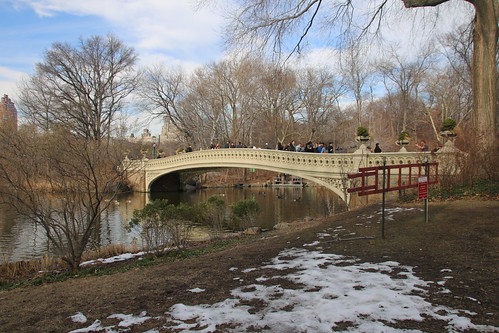

Visit to Central Park (New York City) - February 16 & 18, 2017

New World A Coming was a a ground breaking book by Roi Ottley in 1943.  Ottley was a journalist who wrote for the Amsterdam News in the 1930s, where he gained a great understanding of the African American Community in New York, especially Harlem.  He went to St. Bonaventure University before transferring to the University of Michigan where he studied journalism (Go Blue!)  In 1943, Ottley wrote New World A-Coming, and provided an overview of life in Harlem from the 1920s and 30s.  The book became a best seller and won the Peabody Award.  The year after the book came out, WMCA in New York City produced a series with Ottley as the writer to share these stories to an even broader audience.  The Amsterdam News would report the following story after the first episode aired:

"A New World" Holds Premier
S.W. Garlington, New York Amsterdam News (March 11, 1944), page 1
"With the sweeping fury of a resurrection - a new world is coming!"  With this announcement last Sunday over WMCA the premier of the radio program "New World A-Coming" was introduced to the audience of the world's leading independent radio station.  As the music started, one was reminded of "Mood Indigo," but instead it was "New World A-Coming," written by Duke Ellington for the series.
The program was both entertaining and informative.  Even more, it did not pull punches in dramatizing injustices to the Negro and suggested a square deal on all fronts.
Canada Lee, famous actor, served as narrator, the student orchestra furnished the music and a host of actors relayed the various stories - bits of Americana one never seen in the daily press.
The City-Wide Citizens Community on Harlem sponsored the program - to run for 26 weeks - in hope of making democracy less of a dream and more of a reality.  Columnist Dorothy Norman spoke for the committee.  Roi Ottley, former Amsterdam-News staff writer and author of the best-selling NEW WORLD A-COMING, from which the series is based, also spoke.
Each Sunday, at 3:03 p. m., for the next 25 weeks.  WMCA and the City-Wide Citizens Committee on Harlem and accompanying artists will present to the radio world a 27-minute program of entertainment and information, designed to reassure the fact that A NEW WORLD IS COMING.
On Christmas Eve in 1944, the episode that I am featuring was first aired.  The episode shared a series of beautiful Christmas carols sung by Muriel Smith and the Boys Choir Of St. Phillips Church, including The First Noel, Hark the Herald Angel's Sing, Joy to the World and others.  In between the songs, there were blunt commentaries by leaders of the African American community about the condition of this population, especially during war time.  It is amazing to think about the progress we had made in the nearly 75 years since this episode aired.  It is disheartening to think about the continued struggles that we continue to face.  The commentaries were from Dr. Channing Tobias, Lester Granger, Roy Wilkins, and series creator Roi Ottley. Please enjoy this beautiful music and think about the progress we have yet to make in the States.

New World A Coming Christmas Episode (December 24, 1944)


Another 25 Days of Old Time Radio Christmas (from 2017) & Other Links

25 Days of Old Time Radio Christmas (from 2016) 

25 Days of Old Time Radio Christmas (from 2015) & Other Links

25 Days of Old Time Radio Christmas (from 2014)

Friday, December 1, 2017

Another 25 Days of Old Time Radio Christmas - Day 1: Candy Matson's Christmas Episodes

For the fourth time this year, I am going to celebrate Christmas episodes from Old Time Radio by showcasing a program a day (well, I will try).  I expect to have some repeats, but also some new shows featured as well.  If you have Sirius XM, you can listen to Greg Bell's Old time radio channel (#148).  Or you can see my previous OTR Christmas entries (or drop to the bottom of this message).  

I need to catch up a bit, so I am going to start out with a repeat from a short-lived series that I really enjoy.  Here are actually two from Candy Matson.  These are great fun and definitely worth a listen.


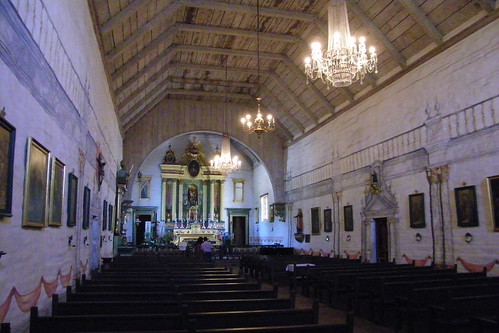
Mission San Jose (Freemont, California) - Sunday April 21, 2013

Mission San Jose (Freemont, California) - Sunday April 21, 2013

There are a number of series set in San Francisco on old time radio: Sam Spade; Pat Novak For Hire;  Have Gun, will Travel, just to name a few.  One that you need to add to that list is a West Coast series run by NBC called Candy Matson, YUkon 2-8209.  Candy Matson was voiced by Natalie Masters, who was heard in the mid 1950s on the Fibber McGee and Molly show.  Candy Matson was the brainchild of her husband, producer Monty Master.  The Digital Deli article (see the link below) cited that they never quite found the national audience and she never became a household name.  Maybe having a female lead of a detective series was ahead of the times.  Maybe it was too smart or the references were made too much to San Francisco elements that few outside the city could get (also from Digital Deli article).  In the Jack Frost episode listed below, there were three reference to Lefty O'Doul and the San Francisco Seals (of the Pacific Coast League).

And while there are only a handful of episodes that are with us, we do have two Christmas shows to share.  I need to dig around a bit, but it is interesting that in these episodes, it always starts with the phone ring and Candy giving her phone number (YUkon 2-8209).  It is just like the way that Yours Truly, Johnny Dollar would open week after week.  They both started doing that in 1949.  You know that imitation is the dearest form of flattery!  Candy is constantly joined by Mallard (a police lieutenant played by Henry Leff) and Rembrandt (a photographer played by Jack Thomas) in the adventures.  It is a great series that is very well written - shame we only have a few examples.

There are two Christmas themed episodes that are among the 14 or so recordings that survive.  On December 19, 1949, the episode "Jack Frost" aired.  It is the holidays and things are crazy at Department Store.  Candy's dear friend Myra is the Advertising Director at the store and is in a crisis when Jack Frost is missing!  Jack Frost, Santa's helper, is missing and Myra is in a pinch!  Who will the kids share their Christmas wishes with???  Candy talks her friend Rembrandt to play Jack Frost, but then they discover a plot filled with jealousy...and MURDER!


I will write up a few entries later next year on the interest in the old California Missions in Old Time Radio.  One of these episodes will be Candy Matson's holiday episode that first aired on December 18, 1950.  Candy, Rembrandt and Mallard head to San Juan Bautista to take a break from the city.  While in town, they pay a visit to the old Mission.  And while meeting a Father at the Mission, they are alerted to a tragic suicide.  But upon examining the body, they discovered that it was actually a case....or MURDER!


Here are some links to programs relating to Candy Matson:


25 Days of Old Time Radio Christmas (from 2016) 

25 Days of Old Time Radio Christmas (from 2015) & Other Links

25 Days of Old Time Radio Christmas (from 2014)

Sunday, November 5, 2017

Corey's Charleston Conference Sessions

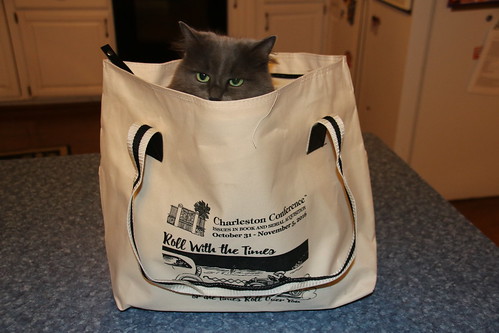
148/365/3070 (November 6, 2016) - Wanda Enjoying the Charleston Conference Tote Bag

Here are my presentation slides for my sessions coming up at the Charleston Conference, November 6th through the 10th. Here is the full schedule - one of the best library conferences on this - or any other planet!

History Has Its Eyes on You: Lighthouses and Libraries Weathering Storms of Change - or is being the Public Good Good Enough?
Wednesday November 8, 2017 11:35am - 12:15pm
Citadel Green Room South, Embassy Suites Hotel 337 Meeting St, Charleston, SC 29403

Also check out the Podcast that features this program: http://atgthepodcast.libsyn.com/podcast/atgthepodcast-038-corey-seeman-interview


For hundreds of years, the United States has been protected by two venerable institutions. Lighthouses have served as a beacon on the shores to guide ships carrying both people and cargo to a safe harbor. Libraries have served as a beacon to guide people to books, magazines, journals, reference works, recordings and other media for enlightenment, education and enjoyment. Both lighthouses and libraries have enjoyed their status as 'public goods' with little question in regards to the rationale for funding and support. Since most ships have navigation systems and we have all library items on our smartphone (we do right???), questions are being asked about the future of these two beacons.
Change impacting both lighthouses and libraries are remarkably similar. With automation and electrification, lighthouses transitioned to low-maintenance entities and many have been turned into historical museums across the country. Libraries have seen tremendous changes as collections became increasingly electronic over the past two years. The value proposition libraries play on campuses has changed - along with their ability to support community members in the present and many years in the future. While 'what's past is prologue' helps set the scene, the reality laid before both is to adapt or 'wither away on the vine.'
In this presentation, we will look at the parallel paths taken by both lighthouses and libraries in fulfilling their self-mandated missions. To that end, we will look more closely at the meaning of a 'public good' and the demands that librarians have in supporting both current use and future use of collections as we balance between community needs and aspirations. How librarians (and lighthouse keepers) face the coming storm will have a tremendous impact on future generations of our community members.

What's Past Is Possible: Opportunities and Perspectives for Library Alumni Resources


Thursday November 9, 2017 11:35am - 12:15pm 

Grand Ballroom 3, Gaillard Center 95 Calhoun Street, Charleston, SC 29401
Slides Link: http://tinyurl.com/CHS17CSAlumni
Presentation with Jo-Anne Hogan (MLIS, Publisher, Business for ProQuest)

When considering the theme "What's Past is Prologue," there might not be a better application than to think of former students at our colleges and universities. As they venture off into the role of campus alumni, their information needs become complicated when they lose access to the wealth of electronic resources that are available at most campuses. Having resources at hand while a student is wonderful, but the grim reality of having little available to them upon graduation can be a bit of a let down. A growing number of colleges and universities are offering alumni a suite of electronic resources that are either bundled as part of their existing package, negotiated or purchased separately. The value to the vendor may be as an additional revenue line or exposure to a larger population. This might be especially true in business where the need for information and news resources is ongoing. The value to the library may be as a connection to a mission of lifelong learning that can partner with other aspects of the school. Even in a time of tight resource budgets, this can be a good investment by the library.

Kresge Library Services (Michigan) and ProQuest are no strangers to alumni resources. Kresge Library Services (of the Ross School of Business) has long been providing resources to alumni and is featured as an key lifelong learning element of the school. ProQuest has provided a number of alumni packages to libraries over the years as well. In this presentation, we will hear from a library and a vendor in how they approach alumni researchers, resources and what opportunities they provide to these organizations.


Wednesday November 8, 2017 3:30pm - 4:10pm 

Cypress South, Courtyard Marriott Hotel 125 Calhoun Street, Charleston, SC 29401
Slides Link: http://tinyurl.com/CHS17CritBiz

Panel discussion with:
  • Heather Howard, Assistant Professor of Library Science & Business Information Specialist, Parrish Library of Management & Economics, Purdue University Libraries
  • Katherine Macy, Business Librarian, IUPUI
  • Corey Seeman, Director, Kresge Library Services, University of Michigan
  • Alyson Vaalar, Business Librarian, Texas A&M
All academic librarians perform a balancing act between the needs of patrons, licensing restrictions, and the missions of our libraries. As part of the work to develop our campus collections, academic business librarians work with both schools and commercial vendors to provide resources that our business students and faculty require. Business publishers charge academic customers pennies on the dollar for access, but are likely to seek protections for their intellectual content by placing usage restrictions that run counter to what librarians would prefer. This can cause difficulties for librarians in serving their unique populations. This also can run counter to the central principals of “Critical Librarianship”, which is based on a foundation of social justice, the belief that everyone deserves equal opportunities and basic economic, political, and social rights. Balancing the needs of the publishers and business school communities with the principals of critical librarianship is a great challenge for everyone who serves these communities. Business librarians from across the US will explore ways in which collections and critical librarianship collide. Topics to be covered include critical cataloging, the effects of database licenses on the intersection of theoretical academic work and practical business activities, challenges faced by public institutions supporting community entrepreneurs, and how the integration of critical pedagogy with information and data literacies can bring awareness to problems within current collections such as access to information, issues in data collection, and information creation. Through discussion, we hope to provide insight to ways in which libraries, as intermediaries between patrons and vendors, can help address these difficult problems.

Friday, August 25, 2017

Corey's Fall 2017 Presentations on Librarianship

I wanted to share out some of the presentations I am working on this fall. Should be a busy term for sure. I am also working on getting some articles out as well. Mostly these will be focused on the role of public service and librarianship, especially with the viewpoint of our bookless "library of the future" at Kresge Library Services at the Ross School of Business, University of Michigan. While the focus might be on business libraries, I believe that this is applicable to all academic libraries. If you have any thoughts, comments, or encouragement, please drop me a note at cseeman@umich.edu.

Some last day shots - Kresge Business Administration Library - July 18, 2014

Charleston Conference

I have a number of sessions at the fantastic Charleston Conference this November.

History Has Its Eyes on You: Lighthouses and Libraries Weathering Storms of Change - or is being the Public Good Good Enough?


For hundreds of years, the United States has been protected by two venerable institutions. Lighthouses have served as a beacon on the shores to guide ships carrying both people and cargo to a safe harbor. Libraries have served as a beacon to guide people to books, magazines, journals, reference works, recordings and other media for enlightenment, education and enjoyment. Both lighthouses and libraries have enjoyed their status as 'public goods' with little question in regards to the rationale for funding and support. Since most ships have navigation systems and we have all library items on our smartphone (we do right???), questions are being asked about the future of these two beacons.

Change impacting both lighthouses and libraries are remarkably similar. With automation and electrification, lighthouses transitioned to low-maintenance entities and many have been turned into historical museums across the country. Libraries have seen tremendous changes as collections became increasingly electronic over the past two years. The value proposition libraries play on campuses has changed - along with their ability to support community members in the present and many years in the future. While 'what's past is prologue' helps set the scene, the reality laid before both is to adapt or 'wither away on the vine.'

In this presentation, we will look at the parallel paths taken by both lighthouses and libraries in fulfilling their self-mandated missions. To that end, we will look more closely at the meaning of a 'public good' and the demands that librarians have in supporting both current use and future use of collections as we balance between community needs and aspirations. How librarians (and lighthouse keepers) face the coming storm will have a tremendous impact on future generations of our community members.

What's Past Is Possible: Opportunities and Perspectives for Library Alumni Resources


Presentation with Jo-Anne Hogan (MLIS, Publisher, Business for ProQuest)

When considering the theme "What's Past is Prologue," there might not be a better application than to think of former students at our colleges and universities. As they venture off into the role of campus alumni, their information needs become complicated when they lose access to the wealth of electronic resources that are available at most campuses. Having resources at hand while a student is wonderful, but the grim reality of having little available to them upon graduation can be a bit of a let down. A growing number of colleges and universities are offering alumni a suite of electronic resources that are either bundled as part of their existing package, negotiated or purchased separately. The value to the vendor may be as an additional revenue line or exposure to a larger population. This might be especially true in business where the need for information and news resources is ongoing. The value to the library may be as a connection to a mission of lifelong learning that can partner with other aspects of the school. Even in a time of tight resource budgets, this can be a good investment by the library.

Kresge Library Services (Michigan) and ProQuest are no strangers to alumni resources. Kresge Library Services (of the Ross School of Business) has long been providing resources to alumni and is featured as an key lifelong learning element of the school. ProQuest has provided a number of alumni packages to libraries over the years as well. In this presentation, we will hear from a library and a vendor in how they approach alumni researchers, resources and what opportunities they provide to these organizations.


Critical business collections: Examining key issues using a social justice lens

Panel discussion with:
  • Heather Howard, Assistant Professor of Library Science & Business Information Specialist, Parrish Library of Management & Economics, Purdue University Libraries
  • Katherine Macy, Business Librarian, IUPUI
  • Corey Seeman, Director, Kresge Library Services, University of Michigan
  • Alyson Vaalar, Business Librarian, Texas A&M
All academic librarians perform a balancing act between the needs of patrons, licensing restrictions, and the missions of our libraries. As part of the work to develop our campus collections, academic business librarians work with both schools and commercial vendors to provide resources that our business students and faculty require. Business publishers charge academic customers pennies on the dollar for access, but are likely to seek protections for their intellectual content by placing usage restrictions that run counter to what librarians would prefer. This can cause difficulties for librarians in serving their unique populations. This also can run counter to the central principals of “Critical Librarianship”, which is based on a foundation of social justice, the belief that everyone deserves equal opportunities and basic economic, political, and social rights. Balancing the needs of the publishers and business school communities with the principals of critical librarianship is a great challenge for everyone who serves these communities. Business librarians from across the US will explore ways in which collections and critical librarianship collide. Topics to be covered include critical cataloging, the effects of database licenses on the intersection of theoretical academic work and practical business activities, challenges faced by public institutions supporting community entrepreneurs, and how the integration of critical pedagogy with information and data literacies can bring awareness to problems within current collections such as access to information, issues in data collection, and information creation. Through discussion, we hope to provide insight to ways in which libraries, as intermediaries between patrons and vendors, can help address these difficult problems.
November 21-22, 2017
Indian Institute of Management - Ahmedabad, India
Conference Theme: "Entrepreneurship, Innovation and Leadership: The Evolving Role of Business Libraries"

I am super excited to be traveling to India this fall for the 3rd Global Conference on Emerging Trends for Business Librarianship. Could not pass up the opportunity to explore S. R. Ranganathan's Laws, especially as they might be applied to the libraries of the future. This will (hopefully) be worked on for publication in 2018.


Save the Time of the Reader: Using S. R. Ranganathan's Fourth Law to Build the Business Library of the Future
S. R. Ranganathan's monumental 1931 work The Five Laws of Library Science remains one of the most powerful and inspirational works in our field. Even though he might not have envisioned the digital library of today, his work remains a beacon that guides librarians into a new world order. The fourth law, "save the time of the reader," captures the image and primary goal of the library of the future. This stands as a critical principle for the future of libraries, especially those supporting business.

Ranganathan's Fourth Law is one that often focuses on technical services, especially in the context of creating catalogs and the organization of information. Through these resources, we create users who are more self-sufficient in finding what they need. Without these resources, our users wouldn't be able find any books or articles. While the creation of self-service tools like catalogs are a significant investment that libraries make to save the time of our users, they are by no means perfect. We organize information the way that we understand it. The self-service library user is successful when he or she searches search for books or data in the same descriptive conventions that libraries use. But does it work for business researchers, especially for those conducting entrepreneurial research? Does their visioning of information align with the way that we structure it in our physical and digital libraries? Often, the answer is no.

A better way to save the time of the reader is through direct support and assistance. Business researchers live with the appearance of abundance of information, yet become frustrated when their desired items appear elusive. This is especially true for entrepreneurial researchers who are working in new and narrow markets that are not as well defined or described. This presentation will explore S.R. Ranganathan's fourth law re-envisioned to focus on public or reference services to meet the needs of the business and entrepreneurial researcher. This presentation will showcase how business libraries can save the time of our researchers by being service-oriented and responsive to their research needs. Through a service-orientation, we can better understand our users and, in turn, help them find the information and works they need. Through this service-orientation, we can build the library of the future that business researchers and entrepreneurs need.

Wednesday, August 16, 2017

Gildy's Water Problem (The Great Gildersleeve from October 24, 1943)

Every so often I will try to share an episode from Old Time Radio that is personally relevant in my life or that I really enjoy.  I have tried to mostly do this around series (lighthouses, Christmas, etc.), but every so often you have a bump in the road that knocks you off your feet.  For many of us that live in more rural parts of Michigan, we rely on wells to get water into our houses.  And we have had the same well at our house since it was built in the late 1970s...and it just gave out yesterday.  We noticed some cloudy water and then the top of the well started spraying water...so they tried to fix, but our pipes were shot.  No water :( - hopefully fixed this week.  So when I am thinking about those in the water biz - I am thinking of one of the great characters of radio - Throckmorton P. Gildersleeve, Water Commissioner in the town of Summerfield.

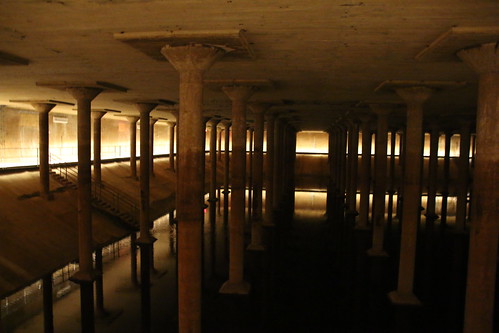
Buffalo Bayou Park Cistern Tour - Buffalo Bayou Park (Houston, Texas - July 20, 2017)
Buffalo Bayou Park Cistern (source for Houston Public Water from 1926 through 2007) - Buffalo Bayou Park (Houston, Texas - July 20, 2017)

The Great Gildersleeve is not only a great radio comedy, it has two aspects that really makes it a series way ahead of their time.  First, it was a spin-off program, having had its main character originally on a different series.  In this instance, the main character of Throckmorton P. Gildersleeve was originally on the Fibber McGee and Molly show. According to the Wikipedia entry (please see the link below), the character was introduced on October 3, 1939 (my birthday - not year!).  The Great Gildersleeve debuted on the NBC Network on August 31, 1941.  Second, the actor to play Gildersleeve (or Gildy) was replaced after a contract dispute.  Harold Peary originated the role and played Gildy until a contract dispute moved him off the show.  He was replaced by Willard Waterman in September 1950. Harold Peary would star in the The Harold Peary Show, often known as Honest Harold.

The Great Gildersleeve is the story of Throckmorton P. Gildersleeve - played by Harold Peary.  Gildy is the self-important Water Commissioner in their town of Summerfield.  A bachelor who was constantly on the look for that someone special, he lived in a house with his niece, Marjorie (played by radio great Lurene Tuttle) and nephew, Leroy (played by child voice star Walter Tetley).  They are joined by Birdie (played by Lillian Randolph) as housekeeper and cook at the home.  One of Gildy's great nemeses is Judge Hooker, who plays a nearly constant foil for whatever they are trying to do.  I have gone hot and cold on Gildersleeve over the years, but the more I listen to these episodes, the more I like them.  I love hearing the Kraft ads (from the early years) and I am trying to listen to more of them.

On October 24th, 1943, the episode broadcast over the NBC Radio Network involved Gildy's job as the Water Commissioner in Summerfield.  His nephew Leroy has to write an essay about what his uncle does so they travel to the office on Saturday to get a tour.  While there, they learn of complaints about the water pressure.  Being a good Water Commissioner, Gildersleeve calls over to the reservoir and talks to Charlie the engineer there and tells him to increase the pressure.  Turns out there is a problem with the "snifter valve" and the pressure is low because it needs to be replaced.  When Gildy insists that he increases pressure (slowly), the valve does indeed break....and Summerfield instantly becomes a dry town!  Like so many instances, it is an issue of deferred maintenance.  I hope you enjoy this episode from October 24th, 1943 (BTW - a time when our President was actually fighting Nazis).

October 24, 1943 (The Waterworks Break Down or Low Water)


Here are some links to programs relating to Old Time Radio and The Great Gildersleve:

Saturday, July 15, 2017

American History on Old Time Radio: Aaron Burr on Cavalcade of America & Weird Circle

A few days ago, I highlighted some episodes from Cavalcade of America that told the story of Alexander Hamilton.  Now, I think it makes sense to share some episodes featured the man that did him in....Aaron Burr.  This is the second episode in my American History series on Old Time Radio and will head on from here.  It is a topic that I am interested in and will share more episodes down the road.  I am focusing on Aaron Burr and Alexander Hamilton - whose duel 213 years ago this week ended the life of Hamilton and set Burr down a path of destruction that is showcased in these two programs.  

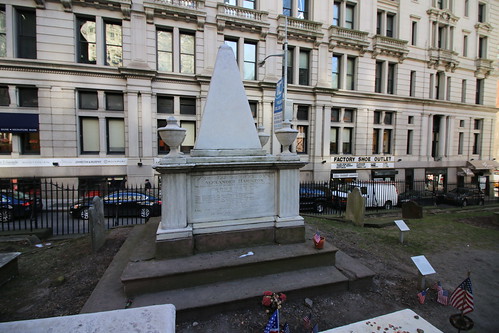
Trinity Church (New York City) - February 17, 2017

Alexander Hamilton's Final Resting Place - Trinity Church (New York City) - February 17, 2017

The Cavalcade of America is a great series sponsored by DuPont.  The purpose of the program has been one of great study and I am definitely glad that I have a few episodes to talk about it.  The long-running show ran from 1935 to 1953 and then had a second life on television.  Starting first on the CBS Network, it moved to NBC in 1939.  This 30 minute program provided a great platform to showcase some of the lesser known incidents and people who made the country great.  Not only was this series a great source of historical dramas, there were numerous fictional stories brought in as well.  From the Internet Archive page (see link below),  "The company's motto, 'Maker of better things for better living through chemistry,' was read at the beginning of each program, and the dramas emphasized humanitarian progress, particularly improvements in the lives of women, often through technological innovation."

On May 12th, 1941, Cavalcade featured the story of Burr's daughter, in an episode aptly named "Theodosia Burr". Theodosia Burr was the devoted daughter to Aaron Burr and his wife, Theodosia Bartow Burr, who was formerly married to a British officer. The mother died with Theodosia was only 11. Theodosia was also have a tragically short life, being lost at sea in 1813. Theodosia was married to the governor of South Carolina, Joseph Alston who died shortly thereafter.
This episode follows her role as a dutiful daughter and political peace-broker (when she could) between her father and Alexander Hamilton.  The episode features Ann Starrett as Theodosia Burr and also stars Alfred Shirley, Agnes Moorehead, Ray Collins, Edwin Jerome, William Johnstone, among others.

Theodosia Burr (May 12, 1941)


The Weird Circle is a great series - and honestly, it is amazing that I have never showcased it before.  The series ran from 1943 through 1945 and featured 30 minute adaptations of stories, many were of the supernatural or fantasy genre.  Many famous stories were included in this series, including those from authors Robert Lewis Stevenson, Victor Hugo, Edgar Alan Poe, Charlotte Brontë and many others from the Victorian era.  These are very great stories, though they tend to over-play their part.  Still, these represent some of the most famous stories in English Literature.

On September 30th, 1943, The Weird Circle produced a dramatization of Edward Everett Hale's "The Man Without a County."  This story was first published in the December 1863 edition of The Atlantic and it told the story of Philip Nolan, an American officer who renounced his country during a trial for treason stemming from his connection to Aaron Burr.  During Nolan's trial, he shouts "I wish I may never hear of the United States again!" The judge grants his wish - and he spends his life in exile.  You can read the original Edward Everett Hale story here (from the Atlantic site) or from here (at Cornell University and the University of Michigan's Making of America site).

Man Without a Country (September 30, 1943)


I hope you enjoy these episodes and this new series coming your way.  

Here are some links to programs relating to Old Time Radio and Cavalcade of America:
Here are some links to programs relating to The Weird Circle:

Here are some of my other blog entries relating to Old Time Radio

Wednesday, July 12, 2017

American History on Old Time Radio: Alexander Hamilton on Cavalcade of America

It has been a long time since I have shared some recordings from Old Time Radio, but I wanted to use the anniversary of Alexander Hamilton's death (on July 12, 1804) to showcase a few episodes relating to one our Founding Fathers.  I have pulled together a few episodes that showcase the biography of Alexander Hamilton and Aaron Burr.  I have wanted to do this since seeing the Musical Hamilton (totally brilliant) and visited a number of Alexander Hamilton historic sights in New York City when I was there in February.

I will try to get these posted this week as we think about the duel and the death of Alexander Hamilton 213 years ago this week.  I will use this to start a series on American History on Old Time Radio - which should be fun (at least for me).  I have some more series to get building up over the next couple of months - hopefully you like them also.


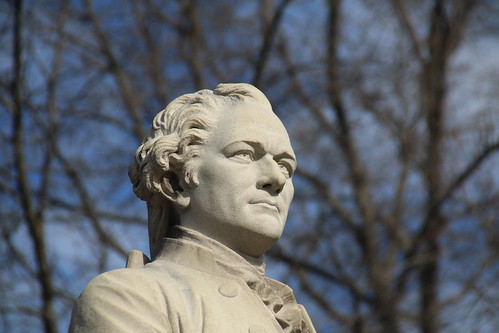
Alexander Hamilton Statue in Central Park (New York City) - February 18, 2017

Alexander Hamilton Statue in Central Park (New York City) - February 18, 2017

The Cavalcade of America is a great series sponsored by DuPont.  The purpose of the program has been one of great study and I am definitely glad that I have a few episodes to talk about it.  The long-running show ran from 1935 to 1953 and then had a second life on television.  Starting first on the CBS Network, it moved to NBC in 1939.  This 30 minute program provided a great platform to showcase some of the lesser known incidents and people who made the country great.  Not only was this series a great source of historical dramas, there were numerous fictional stories brought in as well.  From the Internet Archive page (see link below),  "The company's motto, 'Maker of better things for better living through chemistry,' was read at the beginning of each program, and the dramas emphasized humanitarian progress, particularly improvements in the lives of women, often through technological innovation."

Cavalcade had two episodes that feature Alexander Hamilton - and both are really fantastic.  I am going to list them in the order in which they cover his life, not their broadcast dates.

"Ready On The Right" was featured on Cavalcade on October 21, 1952, and starred Jackie Cooper in the role of Alexander Hamilton.  This story focused on Hamilton's service as General Washington's Aide de Campe while trying to get a field command.  He would finally get his command just prior to the Battle of Yorktown and was instrumental in the victory over the British troops in the decisive battle of the Revolutionary War.  Also staring in this episode was Edwin Jerome, Rosemary Rice, Arnold Moss, Lon Clark, and Staats Cotsworth (who also starred as Casey, Crime Photographer).

Ready on the Right (October 21, 1952)


"The Gentleman From The Islands" was featured over ten years earlier on this long running program and provided a very nice dramatization of the events leading up to Hamilton's duel with Aaron Burr. The episode features Alfred Lunt in the role of Alexander Hamilton who provides a very confident voice to the part. Also featured in the cast are Edwin Jerome, Ted Jewett, Karl Swenson, James McCallion, Frank Readick, Kenny Delmar, Will Geer, Arlene Francis, with announcing by Bud Collyer (who prominently played Superman for many a year on radio).

The Gentleman From The Islands (July 6, 1942)


I hope you enjoy these episodes and this new series coming your way.  

Here are some links to programs relating to Old Time Radio and Cavalcade of America:
Here are some of my other blog entries relating to Old Time Radio