Monday, May 4, 2015

Time Travel without a Guide (Greg Bell and Sirius XM)

My Antique Radio
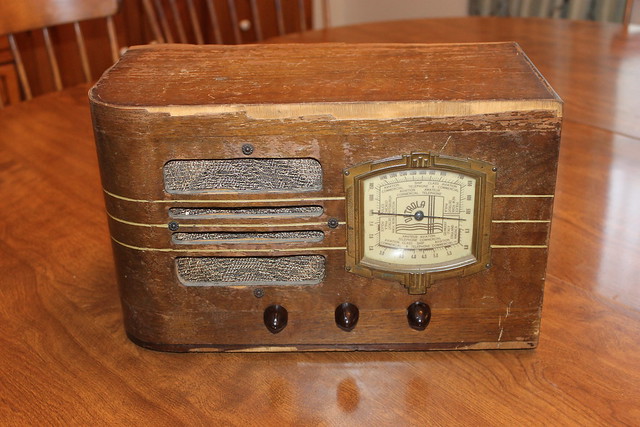
An Antique Detrola Radio
It has not been a great week for many fans of Old Time Radio.  But this week seems to be better...fingers crossed.  Time will tell, but this has all the earmarks of a corporate financial play.  Someone was asking for too much money - maybe someone wanted to cut costs.  Not sure what happened on the inside - but it appears to be moving towards a resolution.  That is good news. [NOTE: As of Monday May 4th - it appears that Greg is back on the air - but I am sharing this in case they want to do this again....]

What was the problem?  It all started out with a simple message on the Greg Bell website:

"The RadioClassics program schedules for this week are no longer accurate. The line-up and format for the channel are being revised by Sirius XM, and we will update the schedule as soon as we have the correct information. Thanks for your patience. If you have any questions or comments, please reach out to programming@siriusxm.com." - From Greg Bell Media website: http://gregbellmedia.com/ShowSchedules.html


It became pretty clear that there was a problem.  And if you tuned to the familiar XM Channel 82 (as I had a chance this week since I was able to borrow my wife's car - where we have Sirius XM) you were greeted with something different.  Well, more exactly, something missing.  The host of Channel 82 - Greg Bell.  He was gone.  They still had the ads, they still had the vintage ads, and they still had the programs - but there was no guide.  There was no Greg.  And that was the problem.  Many people voiced serious concerns on the Radio Classics Facebook page (where there are almost 2000 members).  There were a number of complaints and threats to drop the subscription.  I am sure that people will do that - unless things get fixed.  Time will tell.


The Radio Classics Channel on Sirius XM 82 is a bit unusual.  The entire programming is based on two hour blocks - that often had a them for one or both hours.  These programs were selected to go together.  Maybe they were tied together to showcase the birthday of a performer, writer or producer of radio. Maybe they were tied together to showcase the anniversary of a program - or an event in US history.  Greg Bell even used these blocks to showcase longer series - like Superman and Johnny Dollar Marathons (5-6 episodes in a row).  


So these programs were not brought together by chance, but curated in the actual sense of the word.  We know this because the station was run by Greg Bell.  He would provide, before and after each episode, commentary about the program, and the actors.  This was wonderful in providing context, especially for people new to Old Time Radio.  And then - the last couple of minutes - we had ads.  I am not sure why there were ads here.  I did not love them.  Some had character - like Big Lou - and others were just annoying - designed to scare who ever was listening. 


But we ignored the ads - and enjoyed the commentary.  From Greg's commentary, we learned what these programs meant.  What was the back story?  Who were the stars?  Who were the recognizable voice actors?  Basically anything that we really wanted to know.  And for someone like me who was learning all about Old Time Radio through this channel, it was as if we had a tour guide to a time travel adventure.  Also, it was like we had a curator or professor who could take us through these episodes and put them in a broader context.


I took my inspiration from Greg as I wrote my own blog entries showcasing Old Time Radio.  Recently, I showcased a number of episodes with the background and back story inspired by Greg's commentary:

And when we forgot what we listening too, we could always go to the show schedules that were online.  When we had road trips, I always had these printed out and ready.  This way we could plan when to listen to XM and when they were playing something we did not like.  In addition, Greg was great about helping people out if they were having trouble tracking down a show.  I sought out his help for a program that was interrupted on my travels up north to Michigan.  It was through work like this that Greg built a community.  People even followed him on a cruise with other Old Time Radio enthusiasts.

It was from Greg Bell's commentary and selection that I became a huge fan of Johnny Dollar;  that I first learned of the brilliance of Norman Corwin - especially the Odyssey of Runyon Jones;  where I learned about special programs brought to radio by the likes of Orson Welles & Blake Edwards; it is where I learned to appreciate the world of radio programming.  And the funny thing is that most of the Old Time Radio programs are available from places like the Internet Archive and other online resources - at no cost.  But if you walk to the proverbial front door of the collection of Old Time Radio programs on the web - where would you start?  What would you listen to?  This is where you need a guide - a tour guide as it were.  And that is what Greg Bell did day after day - help us understand and put in context these great recordings.  And that is exactly what is missing with the new format.


Which leads us to change.  Obviously, the fans of Radio Classics voiced strongly that they did not like the new format.  I was able (I hope) to illustrate that above - these views are mirrored by many who posted.  Another channel we listen to - On Broadway XM 72 - would be awful were it not for the hosts Christine Pedi, John Tartaglia, Julie James, and Seth Rudetsky.  (Actually, it would be very awful without Seth).  

I have noticed recently that with these types of changes, there seems to be this standard approach that is actually making changes more quick and abrupt.  Too many decisions made in implementing change are done in a real authoritarian fashion because of these three commonly held beliefs about our ability to absorb change:

  • Change is hard
  • People complain about any change
  • You will never make everyone happy
So this gives people the right to 'damn the torpedoes' and move straight ahead.  There are millions of decisions like this - New Coke anyone!  I want to write more about change management - especially with the changes in my career (librarian) - but that is for a later day.

But this issue shows me that change can be managed better when they involve the people who are the customers - rather than potentially chasing new ones.  Ultimately, we have a market economy. There are many people who like XM 82 and subscribe just for that reason.  They may walk.  Especially since the content is mostly available for free.  


It sounds like things are working towards a resolution.  But seriously - Greg Bell provides a context for these wonderful recordings that is essentially.  Imagine a museum deciding that most people do not read labels on artifacts - so they are not going to put them up.  From an economic point of view - that might make sense.  But from a mission point of view - it is horrible.  Putting things together with no reason why they were selected is hoarding.  Having something with an explanation of why it is there is curating.  Without a guide - these programs just do not work - and they do not tell us what they can about popular culture in the 1940s through early 1960s.  That is why Greg Bell needs to get back on the air.


I have been a fan of OTR for some time - and a good number of my favorites I first heard via Greg Bell. Taking his commentary out of the equation does not make any sense. I am not sure if this is a financial problem or not - but I hope they get this resolved soon - before summer driving season!  Just a few days ago, Forbes reported that things at Sirius XM are going well - so hopefully they can figure out this problem and restore things to where they were - and loved.
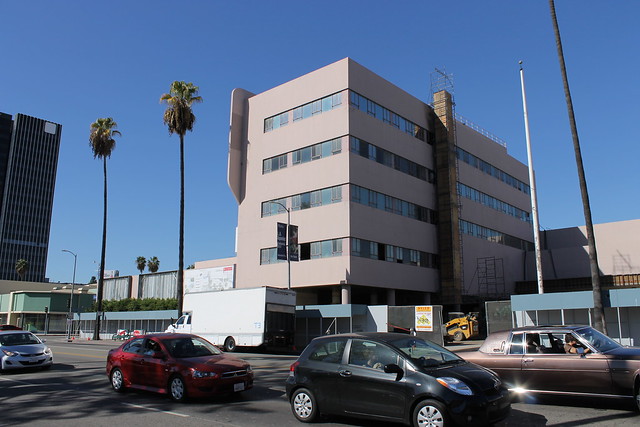


CBS Columbia Square (Hollywood, Los Angeles, California) - October 31, 2013
Columbia Square - Home of CBS Radio during the Golden Years (Hollywood, California) 

Sunday, April 26, 2015

Pictures from ABLD 2015 (Vanderbilt University - Nashville, Tennessee)

Here are my pictures from the great meeting hosted by Hilary Craiglow and the staff at the Walker Management Library at the Owen Graduate School of Management (Vanderbilt University in Nashville, Tennessee).

There are some featured pictures and links to more pics via my flickr account.  Please share as you would like!

About Campus

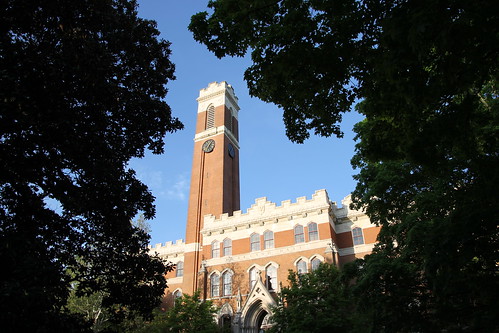
Kirkland Hall - Vanderbilt University (Nashville, Tennessee) - April 21-23, 2015
Kirkland Hall - perfectly framed within the trees on a beautiful sunny day.
Here are some more pictures of Kirkland Hall.  Here are my pictures of various scenes on campus at Vanderbilt.

Meetings


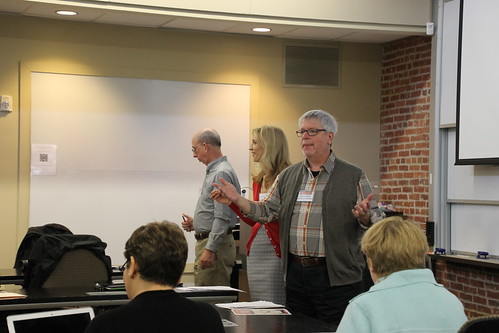
ABLD 2015 Meetings (Vanderbilt University - April 21-23, 2015)
Stephen leading the group in a choral rendering of the hymn...."Let my Space Go" - Maybe I have that wrong.


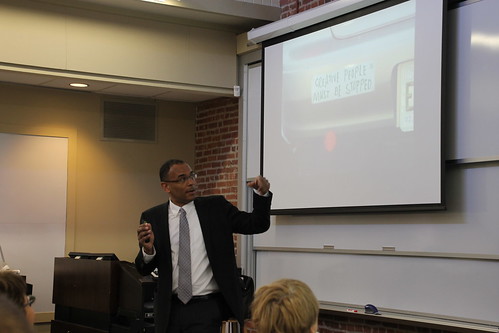
ABLD 2015 Meetings (Vanderbilt University - April 21-23, 2015)
Great talk by Vanderbilt faculty member David Owens on Innovation.

ABLD 2015 Meetings (Vanderbilt University - April 21-23, 2015)
Excellent Conference Host Hilary Craiglow showing how large the squirrel are on campus - I am pretty sure that is what is going on here.


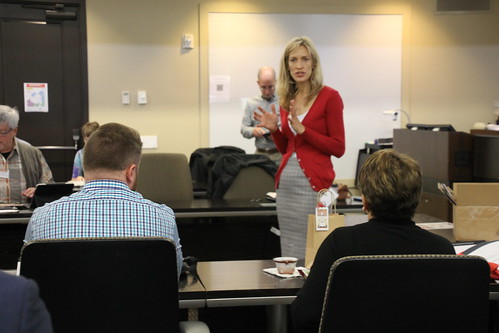
ABLD 2015 Meetings (Vanderbilt University - April 21-23, 2015)
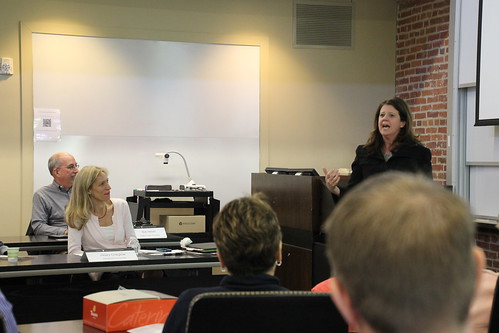
Vanderbilt faculty member Kimberly Pace giving a talk on branding the CEOs,

ABLD 2015 Meetings (Vanderbilt University - April 21-23, 2015)
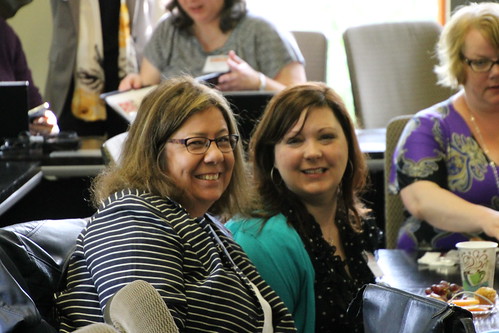
Becky and Erin mugging to the photographer!


Life Imitating Art (University Club, Vanderbilt University)
Life Imitating Art - at the University Club - Jeffry Archer and his portrait doppelganger. 
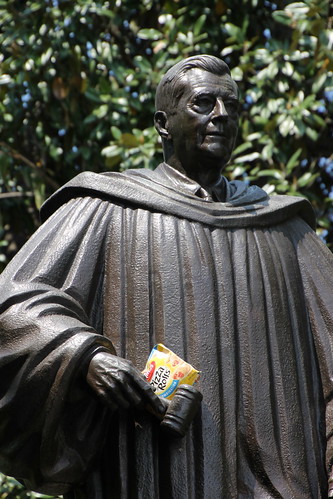
Harold Stirling Vanderbilt Likes Pizza Rolls (Vanderbilt University, Nashville, Tennessee)
Not sure why this statue had Pizza Rolls...Harold Stirling Vanderbilt Statue on walk to the University Club.

Here are all my pictures of the meetings in "Old Mechanical" and the Owens Graduate School of Management. 


Tours


Arboretum Tour

Arboretum Tour at Vanderbilt University (Nashville, Tennessee) - April 21, 2015
Tour of the Arboretum on Campus with Robert Waits, Vanderbilt University Arboretum Director
Here are all my pictures from the Arboretum Tour on Tuesday the 21st.

Quick Stop at the Parthenon

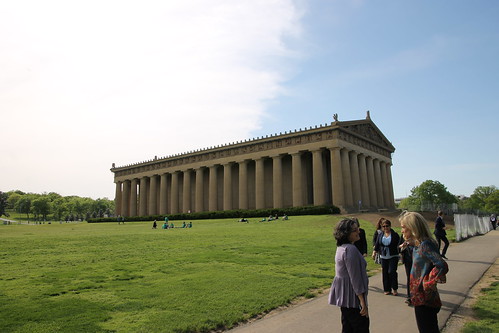
ABLD Quick Tour of the Parthenon (Nashville, Tennessee) - April 23, 2015
Hilary making sure we only spend 5 minutes there....
Here are all my pictures from our stop at the Parthenon.


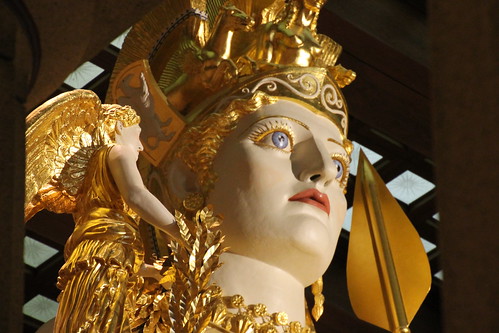
Parthenon (Nashville, Tennessee) - April 21, 2015
Here is Athena from the inside (on Tuesday the 21st), she is 42 feet tall...and does not look very pleased...

Here are all my pictures from the Parthenon - both inside and out - from my visit on Tuesday the 21st before the meetings started.


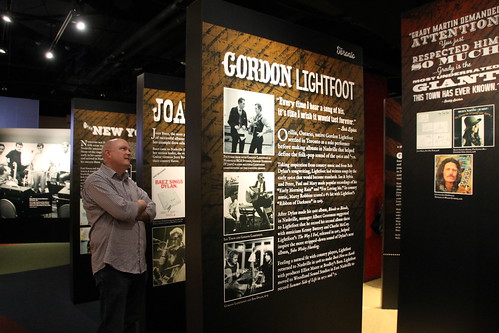
Country Music Hall of Fame and Museum Tour at ABLD 2015 (Nashville, Tennessee) - April 23, 2015
Canadian Love!!!!!!!!!!
The evening tour of the Country Music Hall of Fame and Museum in downtown Nashville on the last day was wonderful.  Here are all the pictures from that great event at the museum.


Squirrels and Other Animal Friends

Squirrel Enjoying Fried Chicken at Vanderbilt University (Nashville, Tennessee) - April 23, 2015
I enjoyed getting on campus early both mornings.  Lots of active squirrels including #432 on my squirrel bucket list - squirrel eating fried chicken.  (Seriously, I do not have a squirrel bucket list...yet).

Squirrels at Vanderbilt University (Nashville, Tennessee) - April 20-23, 2015
Here is one from the morning of the last day over by the Student Center.  Kinda mugging for the photographer!
Here is a link to all my squirrel pictures at Vanderbilt during ABLD

Chipmunk at Vanderbilt University (Nashville, Tennessee) - April 20-23, 2015
Chipmunk near the Student Center - they are actually easy to find since they are noisy (unlike most squirrels)
Here is a link to all my chipmunk pictures at Vanderbilt during ABLD (not as many - sorry fans for Alvin and Co)!

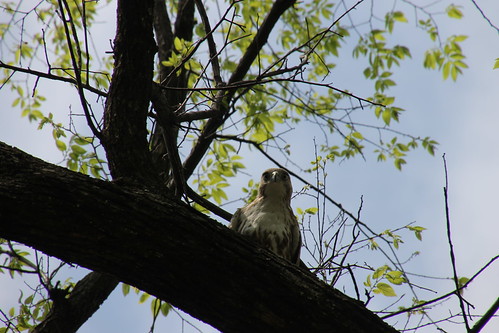
Finally, on the way back from lunch, a red-tailed hawk flew low over us as we walked.  I do not think he was interested in us, but I did get a cool picture.  It was Explored on flickr - which is very cool - this is for the 500 or so "most interesting" pictures posted each day.  This is why the picture has over 10,000 views already (hey - these are the stats that I care about)!

315/365/2506 (April 22, 2015) - Red-Tailed Hawk at Vanderbilt University (Nashville, Tennessee) - April 22, 2015 - Explored!
Red-Tailed Hawk - looking for lunch!
Here are the other pictures of that hawk on Wednesday.

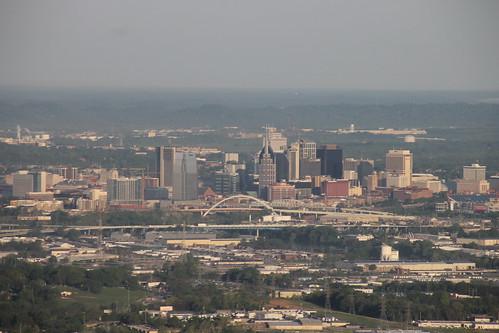
And for my flight geeks - here is a view of Nashville on the way out of town


Scenes from the Air: Delta Airlines Flight 1268 (Nashville to Detroit) - Friday April 24, 2015


If you want to go back - you can see all my ABLD pictures back to 2009 (Tuscaloosa).

Once again - Here are all my ABLD pictures from this great meeting in Nashville.

Thanks Hilary and the great staff at Walker for making this a fantastic meeting!

Sunday, April 19, 2015

Announcing the 4th Annual Kresge Library Food Drive 2015 (Ross School of Business - University of Michigan)

4th Annual Kresge Library Food Drive 2015
Ross School of Business (University of Michigan)
Monday April 20 through Friday June 5, 2015

347/365/1808 (May 24, 2013) - Kresge Library Food Drive 2013 Food Fight - May 24 Update


Part of the food collected in 2013 (in our old digs)

Please join the Kresge Library of the University of Michigan’s Ross School of Business as we embark on our 4th springtime food drive for Washtenaw County food banks.  We are looking to collect non-perishable food donations that will be distributed to local food banks in June. We are undertaking this food drive now for two big reasons:

  • While many organizations coordinate food drives around the holidays, hunger is a year round problem.  Food drives during the spring and summer are less common, but are critical for food banks’ ability to help families in need.
  • At Ross, nearly 40% of our students graduate every year after Winter Term and many leave Ann Arbor.  A food drive is a great way to lighten your load as you head out with your degree in hand, while helping less fortunate people in Michigan.


Starting on Monday April 20th through Friday June 5th (which also happens to be National Doughnut Day), the Kresge Library will be collecting non-perishable food items and other personal products for Washtenaw Area food banks (Saline Area Social Services and the Hope Clinic  in Ypsilanti).  We missed our food drive last summer because of the move with the construction project - but we are back this year.  We will try to restart the “Food Fight” with Gast Library at MSU next year.  Regardless, the real winner will be the food banks that will be able to replenish their stocks at a time when donations are at their lowest.  During our food drives from 2011 through 2013, we collected over 50 boxes of food each year for Washtenaw County Food Banks.  

Here are the specs:
  • Dates: Monday April 20 through Friday June 5, 2015
  • Location: Drop-off boxes in the Ross Modular Offices (or MOtown - right across from the front of Ross).  The boxes will be at the Kresge Library Services Reference Desk (right when you enter to Modulars).
  • Times: The Modulars Offices are open Monday through Friday, 8am to 5pm.

Per the guidelines established by many food banks, we ask you to make sure that the donated items are: 
• Non-perishable food products
• Contained in factory-sealed containers
• Currently not expired products
• Not in glass containers (most food banks avoid these as they can break in transit)

Food Items in great need include:
• Tuna Fish or other canned fish or meat
• Beef Stew, Meat Soups
• Hearty Soups
• Canned Spaghetti or Pasta
• Chili
• Beans (kidney, pinto, green, yellow, refried or black beans)
• Baby Food or Formula
• Ensure or other nutritional supplement drinks
• Rice
• Dry Beans
• Noodles, Macaroni
• Powdered Milk
• Pancake or Baking Mixes
• Cereal/Oatmeal
• Granola Bars
• Peanut Butter
• Jelly (in plastic jars)

Many Food Banks also collect unopened personal products including:
• Diapers
• Toothpaste
• Toothbrushes
• Soap
• Shampoo
• Disposable Razors
• Travel sized personal products are also very useful


If you have any questions or special requests, please contact Corey Seeman atcseeman@umich.edu or 734-764-9969.  

Thank you in advance for supporting this great cause and helping those in our area who are less fortunate.  

Monday, March 30, 2015

Lighthouses on Old Time Radio - Thunder Rock on Studio One (1947)

Here is the 11th entry in my lighthouses on old time radio series.  I hope you are enjoying all these great old time radio programs with a lighthouse theme.  I am staying on the CBS Radio Network with some of the creative programs that they produced over the years.  This program took place 10 years before Lightship was on the CBS Radio Workshop.  This showcased episode comes from Studio One,  a one-hour program that ran from 1947 through 1949 on the CBS Radio Network.  The series was produced and directed by Fletcher Markle who pulled together a great group of actors and actresses to perform longer adaptations of plays and novels.  The works that were adapted for the radio through this program include Alibi Ike, Red Badge of Courage, Wuthering Heights, The Thirty-Nine Steps and many others.

In a review from Variety (May 7, 1947, p52) for its first episode (Under the Volcano), there is a great summary of the problem that CBS was facing on Tuesday nights.

For some years CBS has been coping with the problem of how best to compete against the two top-rated shows in radio, Fibber & Molly and Bob Hope in the 9:30-10:30 Tuesday night stretch on NBC.  Bill Paley's sales boys have virtually resigned themselves to the awareness that so long as the Fibber-Hope combo remains in the public favor, any sponsorship nibbles for the Tuesday hour are pretty much out of the question.  That's why the CBS 60-minute period has become a favorite sustaining stamping ground for the networks' programming dept.

They've now hit on an idea that may eventually pay off, certainly in prestige, and (or more importance to the web since it's already loaded down with prestige programming), in audiences.  For its new hour-long series of 60-minute dramatic series, the network has imported Canda's 25-year old Fletcher Markle, who as writer-actor-director-producer in his Canadian broadcasting ventures, has already been likened somewhat to Orson Welles.  (The pair, incidentally, teamed up last summer of Welles' Pabst commercial series on CBS.)

Apparently not for nothing has the Welles-Markle comparison cropped up, for when it comes to unorthodox techniques, young Markle can virtually throw the book at his audience.


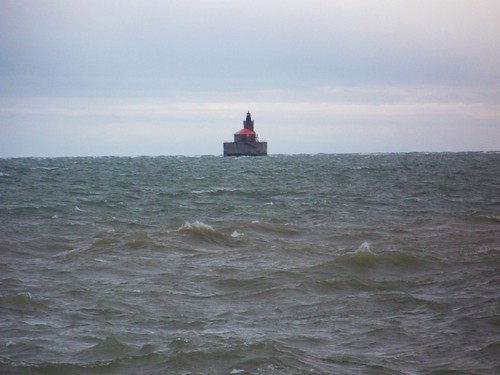
Port Austin Reef Lighthouse (Michigan)

Port Austin (Michigan) Reef Lighthouse 
(Lake Huron - OK wrong Great Lake - but it works) - June 2008

The program we feature today Thunder Rock from September 2, 1947.  The radio play was adapted from the 1939 stage play by Robert Audrey.  Audrey was a playwright and screenwriter who later became a paleontologist. While the play closed after only 3 weeks on Broadway, it ran longer in London and inspired the wartime British movie to be made in 1942 staring Michael Redgrave, Barbara Mullen, James Mason and Lilli Palmer.  The adaptation opens with Fletcher Markle reading the plaque that was used to dedicate Thunder Rock lighthouse:

On the night of May 16, 1849, the sailing ship Land O' Lakes out of Buffalo, bound for Milwaukee, encountered a northwest gale.  800 yards north of this spot, she stuck the reef and floundered.  All hands were lost, including 60 immigrants, passengers on the unfortunate vessel.  To the memory of the sailing ship Land O' Lakes, lost in these northerly waters of Lake Michigan, this lighthouse is dedicated.  Thunder Rock A.D. 1901.

Thunder Rock was a fictional lighthouse in Northern Lake Michigan, and a refuge for a newspaper man (David Charleston) who sought to run away from his problems, and the problems of the world.  So content was he to be far removed from the work of man that he would not even accept a radio to keep in touch with the outside world.  Besides monthly supply and inspection visits, there was no one to communicate with out on the Lighthouse, but that was not a problem for David.  Joining him in his solitude were people that were the creation of his imagination.  They were the crew members and passengers on the ill-fated Land O' Lakes.    To create a better world, David created in his mind personas for each of the passengers and crew on that ship.  And after sending off his former mate Streeter, who went off to fight the Japanese in China, David retreated to the world of 1849 and the optimism that existed among people who would leave everything for a new chance.  The lonely lighthouse was not only the setting for the play, but practically a character itself.  Through its history and in particular, the dedication plaque, David found meaning in a world on the brink of war.

The Studio One cast included director Fletcher Markle in the staring role, with Clarence Derwent, Hester Sondergaard, Robert Dryden, and Stefan Schnabel.

Thunder Rock (September 2, 1947)


Please enjoy these great episodes.  This is a real treat and a great way to continue my Lighthouse Old Time Radio series.  I will have another entry in about a week!

Here are some links to programs relating to Old Time Radio and Studio One:

Friday, March 27, 2015

Lighthouses on Old Time Radio - Lightship on CBS Radio Workshop (1957)

Here is the tenth entry in my lighthouses on old time radio series.  I hope you are enjoying all these great old time radio programs with a lighthouse theme.  I have a good number more to do - hopefully they will not be so far apart.  With today's entry, we go to one of the great CBS Radio programs in the late 1950s that showed the network was not giving up on the medium.  There are many times where it seemed that CBS Network was to radio in the late 50s what PBS is to TV now - head and shoulders above all else.  Even in the late 1950s and the early 1960s, when more and more Americans had TV sets for entertainment, CBS Radio had some of their best work.  These included Suspense, Gunsmoke, Frontier Gentleman, Yours Truly, Johnny Dollar and the program that we are showcasing today, the CBS Radio Workshop.

The CBS Radio Workshop continued the tradition at the network to produce some of the most innovative programs on radio.  The program was intended to provide a link back to the Columbia Workshop days and Norman Corwin and provide amazing drama "dedicated to man's imagination, the theater of the mind" In 1956, CBS returned to the airways with a program that would cement their network as the home for innovation.

Starting in January 1956, the CBS Radio Workshop would be on the air for 86 episodes through September 1957.  The CBS Radio Workshop was designed not to be commercially lucrative, but to find a place where the network could put on cutting edge works that might not match with a sponsor's goals.  The 30 minute program started out with a two-part adaptation of Huxley's Brave New World and featured many original and adapted programs.  These features great radio talent and special effects that were the best in the business.  One of my favorites, though not dealing with lighthouses, is called The Storm, and aired on February 10, 1956 featuring William Conrad.  I will come back to this great series from time to time - it is a treasure.

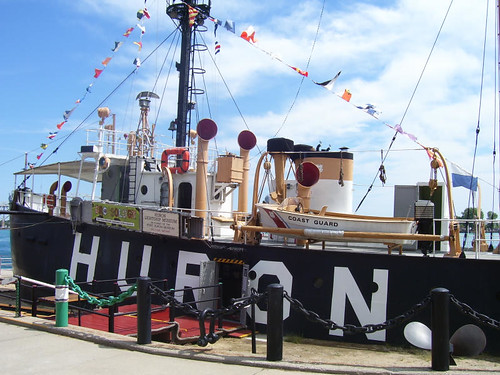
Huron Lighthship

Huron Lightship (Port Huron, Michigan - July 2007)

The program we feature today is Lightship - which aired on April 28, 1957.  This story was an adaptation of the Archie Binnis' 1934 novel of the same name.  According to an entry about the author:

"Archie Binns, novelist and historian of the northwestern United States, is best known for his critically acclaimed novel Lightship (1934). Based partly on Binns’ own experiences at age eighteen aboard the Umatilla Reef Lightship off Cape Flattery, Washington, the story brings together the diverse lives of nine sailors as they struggle to save the ship, which has broken loose from its moorings in a deadly storm." - Matthew Everston - from Gidmark, Jill B., ed. Encyclopedia of American Literature of the Sea & Great Lakes. Westport, CT, USA: Greenwood Press, 2000.

Lightship does a great job of capturing the danger and desperation that can befall a crew of a lightship.  The episode starts off with a man overboard, and crew members struggling to retain focus and their mission when they are doing anything to be relieved from their service.  But when their relief was delayed, the crew grew more desperate to try to get back to port in Seattle.  Not only do the pine for returning to shore, the also sabotage their ship to force their return.  But their service to the ships heading in and out of Seattle kept them on the water longer than they wished.  This great episode features actors Luis Van Rooten, Dan Ocko, Ralph Bell, and Santos Ortega.

Lightship (April 28, 1957)


Please enjoy these great episodes.  This is a real treat and a great way to continue my Lighthouse Old Time Radio series.  I will have another entry in about a week!

Here are some links to programs relating to Old Time Radio and CBS Radio Workshop

Tuesday, March 17, 2015

Lighthouses on Old Time Radio - Vincent Price in Three Skeleton Key (Escape and Suspense)

Here is the ninth entry in my lighthouses on old time radio series.  I hope you are enjoying all these great old time radio programs with a lighthouse theme.  I have a good number more to do - hopefully they will not be so far apart.  With today's entry, we ask ourselves three questions:

Tired of the everyday routine? 
Ever dream of a life of romantic adventure? 
Want to get away from it all?

With that, I offer you ESCAPE! This was one of the most famous shows on the CBS Radio Network.  It ran from 1947 to 1954 and, along with Suspense, Gunsmoke and various programs led by Norman Corwin (that will be covered later in this series), cemented the place for CBS to be at the Pantheon of the Golden Age of Radio.  Escape featured many adapted versions of short stories that placed the characters in difficult, if not impossible adventures.


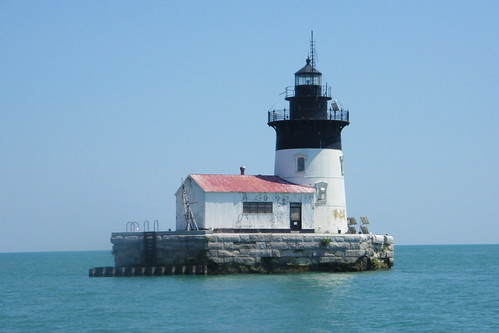
Detroit River Light (South Rockwood, Michigan)

Detroit River Light (Lake Erie - July 2011)

It was 65 years ago today that one of the most famous Escape episodes aired.  Three Skeleton Key aired on March 17, 1950.  The story was written by George G. Toudouze (1877-1972) and it first appeared in English in the January 1937 issue of Esquire.  Twelve years later, James Poe adapted it for radio, and the rest is history.  The story story centers on three men who work at a lighthouse far off the coast of French Guiana in South America on the Atlantic Ocean.  The three men are Jean, the newest member of the crew at the lighthouse and the narrator of the radio plays.  Louie is the tough nosed leader of the crew who cherished his quiet.  And Auguste was a former actor on the Paris stage, a short hunchback who loved to talk...and talk...and talk.  As Jean sat on watch one night, a ship was heading towards the light and the rocks on the key.  And while the light was working, they soon realized that the ship was not manned by a normal crew.  Rats.  Thousands and thousands of rats made up the crew of that ship.  And as it approached the lighthouse, the lives of these three lighthouse keepers would be irrevocably changed.  In many ways, it is a perfect story for radio.  There is so much tension and drama is knowing that an army of rats was just on the other side of a brass door.  But there are so many elements that make it an amazing listen.

While it aired 65 years ago today, it was, in fact, the second time that it aired on the series.  The first time happened only a few months before on November 15, 1949.  The opening was tweaked to reflect this:

Tonight, we escape to a lonely lighthouse off the steaming jungle coast of French Guiana and the nightmare world of terror and violence as we bring you again in response to hundreds of requests "Three Skeleton Key" starring Vincent Price.

It would also air three more times, once on Escape,  and twice on Suspense.  While all these are all great, none can top Vincent Price as Jean and the recording made in 1950.  Other stars to be in these recordings include Elliot Reid, Ben Wright, John Dehner, Lawrence Dobkin, William Conrad, Harry Bartell, Jeff Corey, Paul Frees and Jay Novello.  All of the episodes were directed by William N. Robson.  And when people select the most famous episodes from the Golden Age of Radio...ones like this, and Sorry Wrong Number always come up to the top of the list.  To get a sense of the power of this story, just consider the opening of the story - brilliant acted by Vincent Price:

Picture this place. A gray, tapering cylinder welded, by iron rods and concrete, to the key itself: a bare black rock, one hundred fifty feet long, maybe forty wide. That's at low tide. At high tide, just the lighthouse, rising a hundred ten feet straight up out of the ocean, and all about it the churning water -- gray-green, scum dappled, warm as soup, and swarming with gigantic bat-like, devil fish, great violet schools of Portuguese man-of-war, and yes, sharks, the big ones, the fifteen-footers. And as if this weren't enough, there was a hot, dank, rotten-smelling wind that came at us day and night off the jungle swamps of the mainland. A wind that smelled like death. A wind that had smelled the slow and frightful death that came one night to this bare black rock. Set in the base of the light was a watertight bronze door  and in you went. And up. Yes, up and up and 'round and 'round, past the tanks of oil and the coils of rope, casks of wicks and racks of lanterns, sacks of spuds, and cartons and cans and up and up and up, 'round and 'round. Over the light storeroom was the food storeroom. And over the food storeroom was the bunk room where the three of us slept. And over the bunk room was the living and cooking room. And over the living and cooking room was the light.

She was a beauty. Big steel and bronze baby with the sun gleaming through the glass walls all about, bouncing blinding little beams off the big shiny reflectors, glittering and refracting through her lenses. The whole gigantic bulk of her balanced like a ballerina on the glistening steel axle of her rotary mechanism. She was a sweetheart of a light.


 And at night, you'd lie there on the stone deck of the gallery with her revolving smoothly and quietly over over your head, easing her bright white eye three hundred sixty degrees around the horizon. You'd lie there watching to see that the feeders kept working, that everything ran right. And it wouldn't be bad. The other two fellows snoring in their sacks two levels down. You'd smoke your pipe to kill the stink of the wind and it wouldn't be bad.


I have listened to this enough that I can always imagine Vincent Price saying "...it wouldn't be bad." when things do not go my way in life. After you listen to it - you might feel the same way.  And while the acting and story were fantastic, the sound effects are simply amazing.  At the end of the 1950 version, you hear this:

Sound effects on "Three Skeleton Key" created by Cliff Thorsness and executed today by Mister Thorsness, Gus Bayz, and Jack Sixsmith, have been awarded the best of the year by Radio and Television Life Magazine. 

This is not surprising at all.  The noise they make for the rats and for the moving parts of the light put you there like nothing else.  This is truly what Norman Corwin called the "Theater of the Mind."

Here are all five episodes.  Make sure you listen to the March 17, 1950 version - it is amazing!

Escape. November 15, 1949

Cast: Elliott Reid (Jean - the narrator), William Conrad (Louis), & Harry Bartell (Auguste)

Escape. March 17, 1950

Cast: Vincent Price (Jean - the narrator), Jeff Corey (Louis), & Harry Bartell (Auguste)

Escape. August 9, 1953

Cast: Ben Wright (Jean - the narrator), Paul Frees (Louis), & Jay Novello (Auguste)

Suspense. November 11, 1956

Cast: Vincent Price (Jean - the narrator), John Dehner (Louis), & Ben Wright (Auguste)

Suspense. October 19, 1958

Cast: Vincent Price (Jean - the narrator), Lawrence Dobkin (Louis), & Ben Wright (Auguste)
This one is trimmed a bit - to reflect the time allotted to programs in the late 1950s.

Please enjoy these great episodes.  This is a real treat and a great way to continue my Lighthouse Old Time Radio series.  I will have another entry in about a week!

Here are some links to programs relating to Old Time Radio and both Escape and Suspense:

Sunday, March 8, 2015

Lighthouses on Old Time Radio - When Cupid Was a Pup from The Cavalcade of America (1946)

Here is the eighth entry in my Lighthouses on Old Time Radio series.  This is the second one I want to feature from the Cavalcade of America.  This is a great story about how people at a lighthouse take care of an abandoned seal pup that was left to die.  And while it was based on a true story, it has a different and very current feel among the stories that were featured on this great series.  More about that later.

The story was pulled from the pages of the Saturday Evening Post.  The Post was the leading weekly publication in the United States for many, many years.  The following passage sums up the impact of the weekly:

Long before Time and Newsweek recapped the events of the world for millions of Americans, long before Reader's Digest and Life condensed the news into words and pictures, the Saturday Evening Post was truly America's magazine. Born in earnest at the turn of the twentieth century, with roots in colonial America, the Saturday Evening Post quickly became required reading for anyone who wished to stay in touch with the issues that mattered in culture, politics, and the economy. The Post, as it became widely known, dominated the American magazine landscape for the first thirty years of the century, both in circulation and influence. In its heyday, it was the voice of American common-sense conservatism. The Saturday Evening Post ultimately faded along with that brand of conservatism, giving way to a less impressive contemporary incarnation of the publication. However, memories of the magazine's greatness live on through the classic Norman Rockwell Post covers that have become essential elements in Americana collections.

-Pendergast, Tom. "The Saturday Evening Post." St. James Encyclopedia of Popular Culture. Ed. Thomas Riggs. 2nd ed. Vol. 4. Detroit: St. James Press, 2013. 445-447. Web. 8 Mar. 2015.

On January 19, 1946, Richard English wrote the column Report to the Editor about a lighthouse keeper who saved a seal pup.  Called "When Cupid Was a Pup," this short story sat on page 6, just next to an advertisement from DuPont extolling the benefits of their nylon bristles on toothbrushes.  While there is no proof to this outcome - it would be great to think that people in the DuPont marketing were looking at their ad in the Saturday Evening Post - and noticed this great story.  What a great addition, they might have thought, to Cavalcade.  A few months later - on April 1st to be exact - it appeared on the air.

The Cavalcade of America is a great series sponsored by DuPont.  The purpose of the program has been one of great study and I am definitely glad that I have a few episodes to talk about it.  The long-running show ran from 1935 to 1953 and then had a second life on television.  Starting first on the CBS Network, it moved to NBC in 1939.  This 30 minute program provided a great platform to showcase some of the lesser known incidents and people who made the country great.  Not only was this series a great source of historical dramas, there were numerous fictional stories brought in as well.  From the Internet Archive page (see link below),  "The company's motto, 'Maker of better things for better living through chemistry,' was read at the beginning of each program, and the dramas emphasized humanitarian progress, particularly improvements in the lives of women, often through technological innovation."


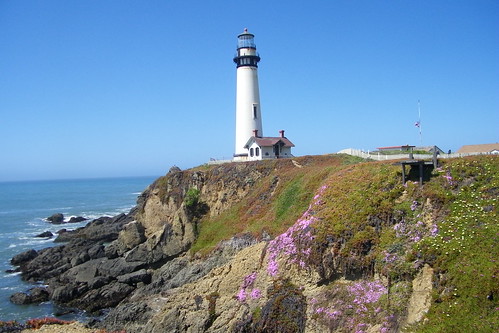
314/365/1775 (April 21, 2013) - Pigeon Point Lighthouse (Pescadero, California)

Pigeon Point Lighthouse (Pescadero, California) - April 21, 2013

The episode itself took some liberties with the original story, but it placed it well in the world of post-WWII America.  In this story, an ex-serviceman, Dick Pearson, looks to get away from civilization - and finds himself working at the lighthouse on the Farrallon Islands - 25 miles west of San Francisco.  He was happiest being far away from women.  But when he learns about the others at the lighthouse, he is displeased to learn that Bobby the cook - was actually Bobbie the cook - the lighthousekeeper's daughter.  But what gets his interest more than anything is an abandoned seal pup that he discovers on the shore near the lighthouse.  "Oscar" has he is to be named, was blind.  Dick Pearson, who was in the medical crew during the war, gets boric acid to take care of his vision.  Through that and subsequent needs that Oscar had, Dick Pearson not only saves the seal, but he learns to love again,

The episode was recorded with a live audience (given the great laughter at times in the recording) and started movie star Cornel Wilde as Dick Pearson. It was stars Elliott Lewis, Griff Barnett, Jerry Hausner, and Sammie Hill.
When Cupid Was a Pup (April 1, 1946)


Please enjoy this great episode.  This is a real treat and a great way to continue my Lighthouse Old Time Radio series.  I will have another entry in about a week!

Here are some links to programs relating to Old Time Radio and Cavalcade of America:
Lighthouses on Old Time Radio: